Weeks 1–2
Pain
Calm the knee down.
Swelling control and early range of motion work protect the joint and get you moving without aggravating it.
What We Treat
The knee that buckled mid-cut. The season you don’t want to lose. Getting back to your sport takes more than time off. It takes a root-cause evaluation and a plan with an endpoint, not a guess.
Sound Familiar?
You’re the athlete who plays through pain because that’s what athletes do. Which is exactly why you’re still telling yourself the knee is fine. Two or more? Keep reading.
Why It Happens
Most ACL tears happen the same way: a plant, a pivot, or an awkward landing that puts more load on the ligament than it can handle. Whether you go the surgical route or a conservative one, the question that actually matters is how stable your knee is now, and that’s not something you can eyeball. That’s why every plan starts with a root-cause evaluation, not a generic protocol.
We use a KT-1000 arthrometer to measure ligament laxity directly, an objective, millimeter-level reading of how much the knee moves compared to your healthy side, instead of a subjective feel test. That number helps guide whether a conservative plan makes sense, and later in rehab it tracks how your graft or ligament is holding up as you load it more.
The Honest Truth
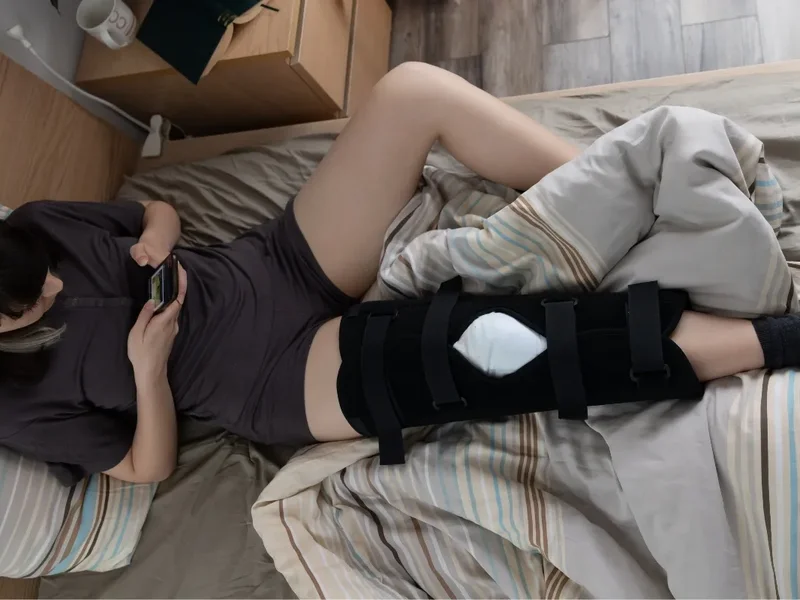
Seasons don’t wait for knees to feel ready on their own. Every week that instability sits untreated costs you strength, confidence, and time on the field you don’t get back.
How We Fix It
You get a plan with an endpoint, built one-on-one with a Doctor of Physical Therapy, every visit. Here’s what the four phases look like for an ACL.
Weeks 1–2
Pain
Swelling control and early range of motion work protect the joint and get you moving without aggravating it.
Weeks 3–8
Prime
Full knee extension, normal walking mechanics, and early quad activation get rebuilt before we load the knee harder.
Weeks 9–16
Perform
Progressive strengthening, balance, and landing mechanics work builds the control an unstable knee was missing.
Weeks 16+
Prevent
Return-to-sport testing, hop tests, strength symmetry, and cutting drills, confirms the knee is ready before you’re cleared to go all-in: that’s the endpoint, not just a date on the calendar.
Dr. Wong and Katrina clearly care about their work and about you getting better. As a pole vaulter who’d never been injured before, they helped me recover just in time for the season.
Shared by Skylar S. · Sports injury recovery
Week 1: couldn’t fully straighten the knee
Month 6: cleared for return-to-sport testing and back at tryouts
Questions, Answered
Not always. It depends on your ligament stability, your activity goals, and whether other structures like the meniscus were involved. We use a KT-1000 arthrometer to get an objective reading of laxity instead of relying on feel alone, and that number, along with your goals, helps guide whether a conservative or surgical path makes more sense for you.
There’s no single number that applies to everyone. Instead of clearing you off a date on the calendar, we use return-to-sport testing, strength symmetry, hop tests, and cutting drills, to confirm the knee is actually ready, not just that enough time has passed.
A KT-1000 arthrometer measures how much your tibia shifts forward relative to your thigh bone, in millimeters, compared to your healthy knee. It gives us an objective number for ligament laxity instead of a subjective feel test, and we can repeat it over the course of rehab to track how your knee, or your graft, is holding up as you load it more.
Book Your Visit
Request a time and a real person calls you back, usually within two business hours. No phone tree. No ‘someone will reach out.’ Just a plan.
5.0 · 330+ Google reviews
Typical response: under 2 business hours
Step 1 of 5
That’s the hard part done. We’ll call during business hours to lock in your time. Most people are on the schedule same week.
Visit Us